Small Rules, Great Mercy: Five Daily Rhythms That Teach Children Grace Before They Can Spell It
Ask most Christian parents what they want for their children and the answer comes quickly: they want them to know the Lord. But press a little deeper and an anxiety emerges underneath—the fear that grace, the very heart of the gospel, is the hardest thing to hand down. Children can memorize verses and recite the books of the Bible. Yet somehow mercy can get lost between the math homework and the sibling squabbles.
The good news is that grace is not primarily taught. It is caught—in the small, repeatable rhythms of home. Families across the country who seem to radiate an unusual tenderness tend to share certain habits. None of them require money or talent. All of them can begin this week.
1. The Failure Blessing at Dinner
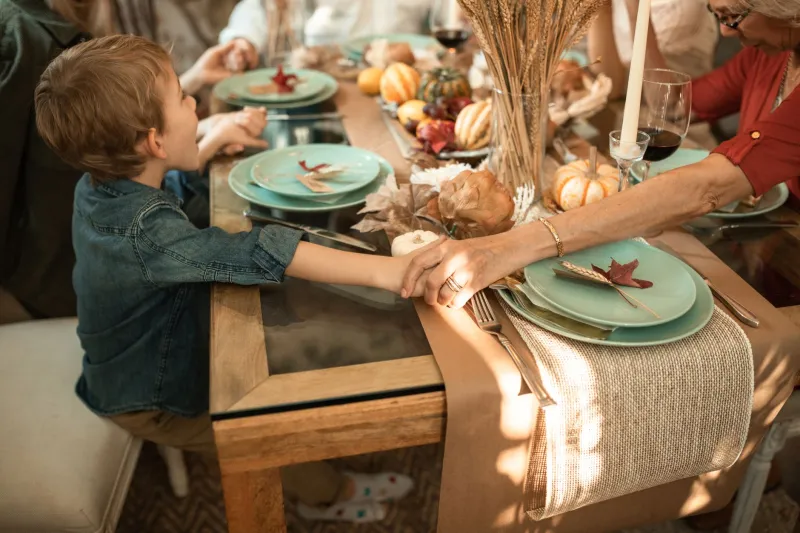
One practice, popularized in households from Tennessee to Oregon, is startlingly simple: once a week, the dinner table opens with an invitation for each person—parents included—to share one thing they got wrong that day. The rule is that no one may fix, correct, or advise. The only permitted response is a blessing: "You are loved, and tomorrow is new."
Children who grow up under this ritual learn something profound before adolescence arrives: failure in this house does not cost you belonging. That truth, planted early, becomes armor against a world that will teach them the opposite.
2. The Grace-Based Apology Script
Sibling conflict is inevitable; unhealed sibling conflict is optional. Several families use a four-part apology that mirrors the gospel itself:
- Name what you did. ("I took your controller without asking.")
- Acknowledge the hurt. ("That made you feel disrespected.")
- Ask for forgiveness rather than demanding it.
- Offer restoration. ("What can I do to make it right?")
Notice what is missing: the word "but." No excuses, no deflecting, no "I'm sorry you feel that way." Children learn that repentance and forgiveness are different muscles—and that both are stronger with practice.
3. Never Repeat a Confession
Perhaps the most countercultural rule in these homes: what is confessed is never repeated. Not to a spouse later. Not as a punchline at the next family gathering. Not as evidence in the next argument. A confession is a sacred trust, and the family treats it like one.
This single rule transforms the emotional climate of a household. Children who know their confessions are safe learn to confess quickly—and quick confession, as any believer knows, is the doorway to quick restoration.
4. The Grace Jar
A mason jar on the kitchen counter, some loose-leaf paper, and a pencil. Whenever a family member receives grace they didn't deserve—a coach's second chance, a stranger's kindness, a parent's patience—into the jar it goes. On New Year's Eve, the jar is opened and read aloud like a testimony service.
Gratitude, practiced this way, becomes concrete. Children discover that unmerited favor is not an abstract Sunday school word; it is a documented, recurring feature of their actual lives.
5. Blessing Before Correction
The final habit may be the hardest for parents: before correcting a child, speak one true sentence of affirmation. "I love how hard you work—now, about that attitude." This is not flattery. It is discipline wrapped in dignity, a small imitation of how the Father deals with us: conviction that never comes without covenant.
Why the Small Things Carry the Weight
Jesus said the kingdom belongs to such as these—children—and it should not surprise us that the kingdom's deepest lessons travel through child-sized containers. A jar on a counter. A script for saying sorry. A blessing over burned dinner and bad grades.
Deuteronomy commanded Israel to teach the commandments "when you sit in your house, when you walk by the way." Grace-filled families have simply taken their cue. They are not raising perfect children. They are raising children who know, down in their bones, that in this home—and in their Father's house—mercy always answers the door first.