Never Too Late: How God's Grace Rewrites the Timeline You Thought Was Closed
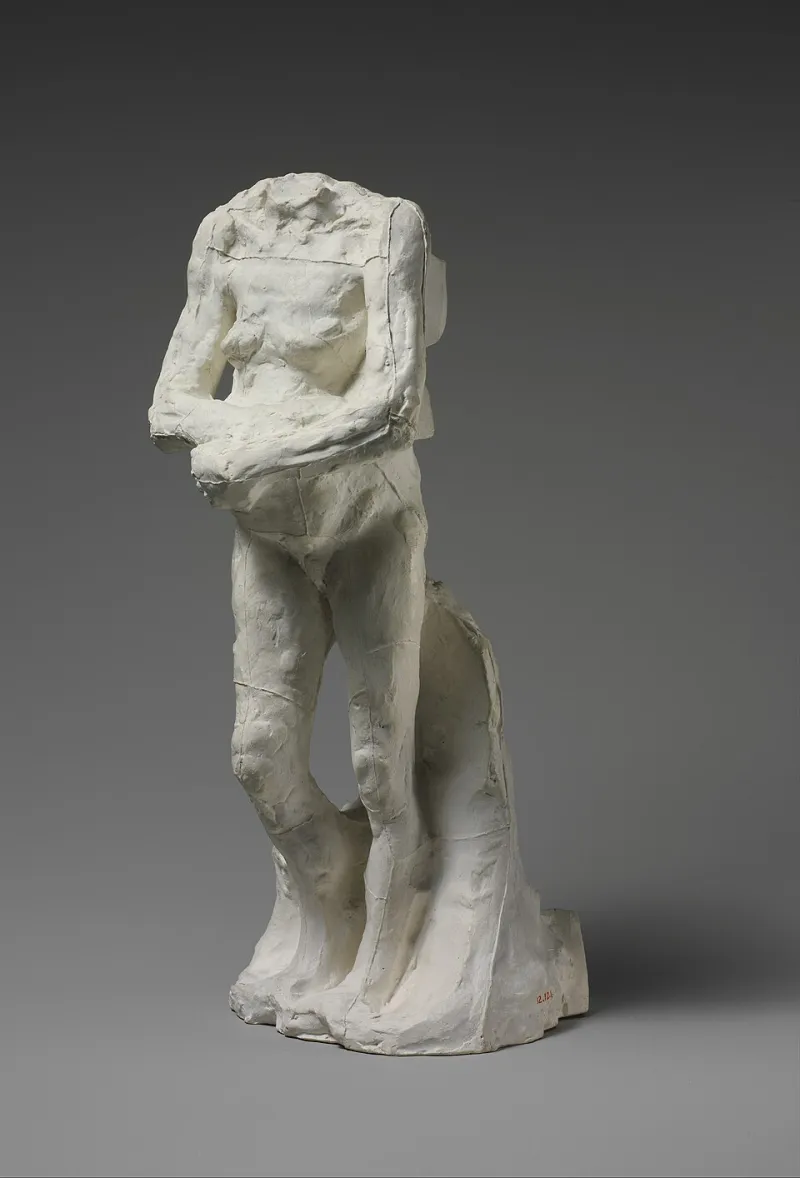
Photo: Auguste Rodin, CC0, via Wikimedia Commons
There is a particular kind of grief that settles into the heart when a person believes they have missed their moment. Perhaps it arrives at forty, when a career pivot feels reckless. Perhaps it comes at sixty, when the children are grown and a long-buried calling resurfaces with uncomfortable persistence. Perhaps it whispers at seventy, suggesting that the years of wandering have disqualified any possibility of a meaningful second act. The American cultural imagination is saturated with the mythology of youth — that transformation belongs to the young, that purpose is something you either seize early or forfeit entirely.
Grace disagrees. Profoundly. Repeatedly. And with great specificity.
The God Who Operates Outside of Cultural Deadlines
The Scriptures are not a collection of stories about people who got it right on the first try at the ideal moment in life. They are, overwhelmingly, a record of divine interruptions — of God arriving in the lives of ordinary men and women at precisely the moment the world would have written them off.
Consider Moses. He was eighty years old when he stood before a burning bush on the far side of the wilderness, decades removed from the Egyptian palace where his early promise had once seemed so obvious. Forty years of shepherding sheep in Midian had not been wasted time in God's economy — they had been preparation. His most consequential chapter had not yet begun. The liberator of an entire nation did not begin his defining work until the age when most of his contemporaries had long since settled into irrelevance.
Consider Abraham, who received the covenant promise at seventy-five and witnessed its fulfillment decades later still. Consider Anna, the prophetess described in the Gospel of Luke, who spent the majority of her long life in faithful widowhood before being granted the extraordinary privilege of recognizing the infant Messiah in the temple courts. Her decades of waiting were not an unfortunate delay. They were the very shape of her calling.
These are not isolated curiosities. They are a pattern — a theological declaration that God's redemptive purposes are not subject to the same chronological anxieties that govern human ambition.
What the Culture Gets Wrong About Timing
American culture is extraordinarily efficient at communicating, both explicitly and implicitly, that certain windows close. There are entire industries built upon the premise that transformation must happen within a particular bandwidth of years. Career advisors speak of pivots as though they carry a shelf life. Social media algorithms celebrate the prodigy and the early achiever. The language of "starting over" is often laced with a faint note of embarrassment, as though beginning again is evidence of failure rather than evidence of grace.
For people of faith, absorbing this cultural narrative without examination can be genuinely spiritually damaging. It subtly reframes God's sovereignty through the lens of human productivity metrics. It suggests, however quietly, that the Holy Spirit is bound by the same constraints as a corporate hiring manager.
But the God who parted the Red Sea and raised the dead is not constrained by the calendar year of your birth. The grace that met Paul on the road to Damascus did not first inquire about his age or the years he had spent actively persecuting the Church. It simply arrived — blinding, transforming, and redirecting a life that the world had every reason to write off as irredeemable.
The Theology of the Unexpected Season
There is a phrase in the book of Joel that carries remarkable weight for anyone who has spent years in what felt like a season of loss: "I will restore to you the years that the swarming locust has eaten." This is not a promise made to the young. It is a promise made to those who have endured prolonged devastation and wondered whether the damage was simply too extensive, the time too thoroughly consumed.
Restoration, in the biblical imagination, is not merely the repair of what was broken. It is the sovereign reconfiguration of circumstances into something that serves a purpose the original timeline could never have accommodated. Joseph did not emerge from prison simply to return to the life he had before his brothers betrayed him. He emerged into a position of influence that his earlier life could not have prepared him for. The suffering was not incidental to the calling. It was integral to it.
This is the theology of the unexpected season: that what appears to be wasted time, misdirected effort, or irreversible delay is, in the hands of a redemptive God, raw material for something the sufferer could not yet perceive.
Permission to Begin Again
For the person reading these words who carries the quiet weight of believing their best years are behind them — who has perhaps spent decades on a path that felt wrong but felt impossible to leave — the message of grace is not merely consolation. It is an invitation.
You are not too old to be called. You are not too far down the wrong road to be redirected. The years you spent in the wilderness were not years God turned away from. He was present in those years, working in ways that will only become legible in retrospect. And the capacity He placed within you at your creation has not diminished with the passage of time. It has, in many cases, been deepened by the very experiences that felt most like detours.
Consider the contemporary landscape of faith and you will find this pattern repeated with remarkable consistency. Pastors who found their calling after careers in law or medicine. Missionaries who departed for the field at an age when their peers were settling into retirement. Writers who discovered their voice after raising children and burying parents and navigating decades of ordinary, faithful life. The testimony of the Church is filled with people who began their most significant work precisely when the world had stopped expecting anything significant from them.
Practical Steps Toward a Renewed Sense of Purpose
If you sense that God may be stirring something in you — a calling deferred, a dream long buried, a direction that seems improbable given your current season — there are faithful and practical ways to respond.
Begin with prayer and honest inventory. Bring the specific question of purpose before God with directness and patience. Ask not merely for confirmation of what you already want, but for clarity about what He has actually placed within you.
Seek wise counsel within your faith community. The body of Christ is equipped, in part, to help its members discern their gifts. Trusted pastors, mentors, and fellow believers can often perceive capacities and callings that the individual, obscured by years of discouragement, cannot see clearly.
Release the comparison. The timeline of someone else's calling is entirely irrelevant to yours. God does not call all people at the same moment or in the same season, and measuring your beginning against another person's middle will produce nothing but unnecessary despair.
Take one faithful step. Discernment rarely arrives fully formed. It most often unfolds through the obedience of a single, modest step taken in faith. The direction becomes clearer in the walking.
The Grace That Has No Expiration Date
Grace, by its very definition, operates outside the systems of merit and timing that govern human endeavor. It is not dispensed according to age, distributed on the basis of past performance, or withheld from those who have taken the long way around. It is given freely, generously, and — most importantly for anyone who has spent years believing their moment has passed — without regard for the lateness of the hour.
Your past timeline does not define your future purpose. It informs it, shapes it, and in the hands of a sovereign God, often enriches it in ways that an earlier, smoother path never could have. The grace that has carried you to this moment is the same grace that is already at work in the season that lies ahead.
The burning bush is still burning. The question is simply whether you are willing to turn aside and look.