Altars in the Waiting: Where Grace Sings in Hospital Corridors and DMV Lines
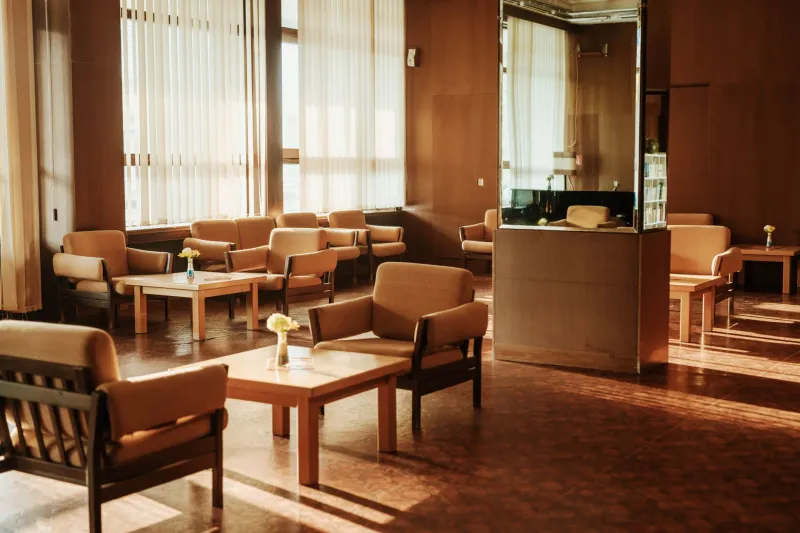
There is a particular kind of silence that lives inside a hospital waiting room at 2 a.m. It is not peaceful. It is the silence of held breath, of vending machine coffee, of a family staring at surgical doors that refuse to open. And yet, ask anyone who has sat in that silence long enough, and they will tell you something strange: sometimes God shows up there first.
We have been trained to believe worship has a dress code and a zip code. It happens at 10:30 on Sunday mornings, in buildings with steeples and padded pews, led by people whose job titles include the word "minister." But Scripture has never been so tidy. The psalms were sung on roads and in exile. Paul and Silas turned a prison cell into a concert hall. And Jesus, more often than not, taught in fields, fishing boats, and courtyards—not temples.
The Sanctuary We Didn't Choose
Consider the woman in the renal waiting room in Dayton, Ohio, who noticed a stranger quietly knitting blankets for every family in the room. When asked why, she said simply, "Somebody did it for me twelve years ago." No sermon was preached that day. But every family in that room received a small, woolen theology of grace: you are not forgotten here.
Or the man in the Department of Motor Vehicles line—two hours deep into a bureaucratic purgatory—who struck up a conversation with the teenager beside him, anxious about his driving test and his father's unemployment. By the time his number was called, the boy had heard, without any altar call, that his life was not a verdict. Sometimes the most spiritual thing we do on a Tuesday is pay attention.
These are not exceptions to worship. They may be its purest form. Jesus defined the highest expression of love not in liturgical terms but in deeply ordinary ones: a cup of cold water, a visit to the sick, clothing for the naked. The waiting room, it turns out, is full of cups of cold water waiting to be poured.
What Limbo Does to Us
There is a reason grace gravitates toward these spaces. Waiting strips us down. The hospital corridor and the DMV line share something with the wilderness: they are in-between places, neither here nor there, where our illusions of control evaporate. And it is precisely in that stripped-down state that we become capable of noticing what we normally rush past.
The Israelites received manna in the waiting. Hannah received her promise in the waiting. Simeon held the Messiah in his arms because he had waited long enough to be found in the right place at the right hour. The in-between is not a spiritual dead zone; it is where God has historically done His most formative work.
Practicing the Presence in Unglamorous Places
If worship can happen in limbo, then our task is not to escape the waiting but to consecrate it. A few modest suggestions:
- Pray the room. In any waiting space, silently lift the people around you. The fidgeting father, the exhausted nurse, the clerk who has heard four hundred complaints today. Intercession transforms spectators into a congregation.
- Carry small mercies. A granola bar for the hungry stranger. A kind word to the receptionist. Grace travels light but lands heavy.
- Reframe the delay. Instead of asking "Why is this taking so long?" try "Who has been placed next to me?" The question changes everything.
None of this requires a seminary degree or a worship band. It requires only the willingness to believe that no square foot of American life is outside the reach of God's presence—not the fluorescent-lit hallway, not the school pickup line, not the plastic chair bolted to the floor.
The Choir You Couldn't Hear
The choir in the waiting room does not wear robes. It is composed of grandmothers praying over strangers, teenagers holding a friend's hand before a biopsy, and ordinary believers who have learned that a sanctuary is not a location but a posture. Grace does not wait for us to arrive somewhere holy before it begins to sing. It sings right where we are stuck—and if we listen closely, we may find ourselves joining in.